
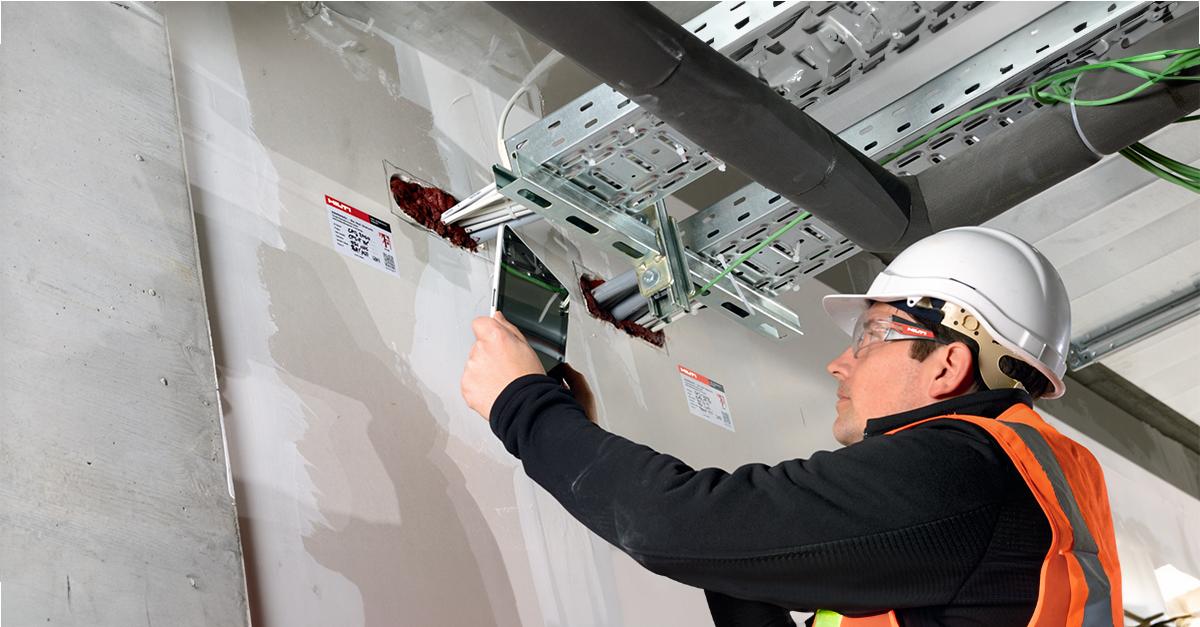
Understanding Passive Fire Protection
Fire safety is a fundamental consideration in the design, construction and ongoing management of buildings. While fire alarms and sprinkler systems are often the most visible elements of a building’s fire safety arrangements, passive fire protection plays an equally important role.
Passive fire protection is incorporated into the building itself. It helps restrict the spread of fire and smoke, protects structural elements and supports the safe evacuation of occupants.
In this guide, SmartPFP explains what passive fire protection is, how it works, the main types of systems and why ongoing inspection and maintenance are essential.
What Is Passive Fire Protection?
Passive fire protection (PFP) refers to the materials, systems and construction methods used to help contain fire and smoke within a building and maintain its structural fire resistance for a specified period.
Unlike active fire protection systems, which respond to a fire through detection, suppression or other actions, passive fire protection is generally built into the structure and fabric of a building.
Its purpose is to help protect occupants, maintain the integrity of fire-resisting construction and reduce the spread of fire and smoke throughout a building.
- Limit the spread of fire and smoke between areas of a building.
- Protect escape routes and support safe evacuation.
- Maintain the fire resistance of walls, floors and other building elements.
- Protect structural components from the effects of high temperatures.
- Reduce the potential for fire to spread beyond its area of origin.
Passive fire protection is a key part of a building’s overall fire safety strategy and must work alongside other fire safety measures.
How Does Passive Fire Protection Work?
Passive fire protection works primarily by dividing a building into fire-resisting compartments and protecting the elements that form those compartments. This approach is known as fire compartmentation.
Fire-resisting walls and floors are designed to restrict the movement of fire and smoke for a specified period. However, these elements often contain openings for essential building services such as electrical cables, pipework, ventilation ducts and other installations.
If these openings are not appropriately protected, they can compromise the fire resistance of the surrounding construction.
Suitable fire stopping systems are therefore used to protect service penetrations and other openings, helping maintain the intended performance of the fire-resisting element.
Other passive fire protection measures, including cavity barriers and structural fire protection, contribute to the overall fire safety strategy. The effectiveness of these systems depends on appropriate design, specification, installation and ongoing maintenance.
What Are the Main Types of Passive Fire Protection?
Passive fire protection includes a range of systems and materials, each performing a specific function within a building. Together, these measures help maintain fire-resisting construction, restrict the spread of fire and smoke, and support the wider fire safety strategy.
1. Fire Stopping and Penetration Sealing
Fire stopping involves protecting openings and gaps in fire-resisting walls, floors and other building elements.
These openings may be created when services such as pipes, cables or ducts pass through compartment boundaries.
Fire stopping systems can include fire-rated sealants, batt systems, collars, wraps and other tested solutions, depending on the application.
Correctly specified and installed fire stopping helps maintain the fire resistance of the surrounding construction.
2. Fire Compartmentation
Fire compartmentation divides a building into separate fire-resisting areas.
These compartments are intended to restrict the spread of fire and smoke, helping protect occupants, escape routes and adjoining parts of the building.
Compartmentation may involve fire-resisting walls, floors, doors and other building elements.
Its effectiveness relies on the continuity and integrity of those elements, including the appropriate protection of joints, openings and service penetrations.
3. Intumescent Coatings
Intumescent coatings are specialist fire protection materials that can be applied to structural steelwork.
When exposed to elevated temperatures, an intumescent coating expands to form an insulating layer. This helps delay the temperature rise of the protected steel.
Structural steel can lose strength as its temperature increases during a fire, making suitable protection important where required by the building’s structural fire design.
The coating system and application thickness must be selected according to the relevant specification and performance requirements.
4. Cavity and Fire Barriers
Cavity barriers are installed in concealed spaces within buildings to help restrict the spread of fire and smoke.
These spaces can include wall cavities, ceiling voids, façade systems and other concealed areas.
Without appropriate barriers, fire and smoke may spread through hidden routes, potentially bypassing other fire-resisting elements.
Correct barrier selection, positioning and installation are essential to achieving the intended performance.
5. Air and Acoustic Sealing
Air and acoustic sealing systems help control air leakage and sound transmission through gaps and service penetrations.
Although these systems can contribute to building performance, air or acoustic sealing should not be assumed to provide fire resistance.
Where a penetration or joint forms part of a fire-resisting element, an appropriately specified fire-rated system is required.
Passive Fire Protection vs Active Fire Protection
Both passive and active fire protection play important roles in building safety. Although they serve different functions, they are designed to work together as part of a building’s overall fire safety strategy.
Passive Fire Protection
Passive fire protection is generally incorporated into the building fabric and is intended to restrict the spread of fire and smoke or maintain structural fire resistance without requiring activation.
- Fire-resisting walls and floors
- Fire stopping and penetration sealing
- Cavity and fire barriers
- Intumescent coatings and structural fire protection
- Fire doors and associated assemblies
Active Fire Protection
Active fire protection includes systems that detect, warn of or respond to a fire. These systems typically require activation, either automatically or through human intervention.
- Fire detection and alarm systems
- Automatic sprinkler systems
- Smoke control systems
- Fire suppression equipment
- Manual firefighting equipment
Passive and active fire protection are complementary. While active systems can detect or respond to a fire, passive systems help maintain the integrity of fire-resisting construction and restrict the movement of fire and smoke. Neither should be considered a substitute for the other.
Why Is Passive Fire Protection Important?
Effective passive fire protection plays an important role in protecting people, property and the structural integrity of buildings. By helping to contain fire and smoke, these systems support safer evacuation, reduce the potential for fire spread and contribute to a building’s overall fire safety strategy.
1. Protecting Building Occupants
Passive fire protection helps restrict the spread of fire and smoke, supporting safer conditions along protected escape routes and giving occupants additional time to evacuate.
2. Maintaining Structural Fire Resistance
Structural fire protection systems, including appropriately specified intumescent coatings, can help structural elements maintain their required performance during exposure to fire.
3. Limiting Fire and Smoke Spread
Effective compartmentation helps restrict the movement of fire and smoke between different areas of a building, reducing the potential for rapid fire spread.
4. Supporting Regulatory Compliance
Passive fire protection is an important consideration in meeting applicable building regulations and fire safety duties. Appropriate specification, installation, inspection and maintenance all contribute to effective building safety management.
5. Protecting Property and Business Operations
By helping contain fire within a limited area, passive fire protection may reduce the extent of property damage and operational disruption. Actual outcomes depend on the fire and the building’s overall fire safety arrangements.
For building owners, facilities managers and responsible persons, maintaining effective passive fire protection is therefore an important part of ongoing fire safety management.
What Are the UK Requirements for Passive Fire Protection?
Passive fire protection requirements in the UK are shaped by building regulations, fire safety legislation and the specific design and use of each building. The applicable requirements vary across England, Scotland, Wales and Northern Ireland, making it important to understand the regulatory framework relevant to a particular property or project.
1. Building Regulations and Approved Document B
In England, the Building Regulations 2010 establish functional requirements relating to fire safety, including provisions for internal fire spread, structural fire resistance and means of escape.
Approved Document B provides statutory guidance on ways to meet relevant fire safety requirements. Passive fire protection measures such as fire-resisting construction, fire stopping and cavity barriers form an important part of building design and construction.
The appropriate measures depend on factors including building use, height, layout and the applicable fire safety strategy.
2. Regulatory Reform (Fire Safety) Order 2005
The Regulatory Reform (Fire Safety) Order 2005 places duties on responsible persons in relation to fire safety in premises within its scope in England and Wales.
These duties include undertaking suitable and sufficient fire risk assessments and implementing appropriate general fire precautions.
Maintaining effective fire-resisting construction and addressing relevant defects may form part of meeting those responsibilities.
3. Building Safety Act 2022
The Building Safety Act 2022 introduced significant changes to the building safety framework in England, including additional regulatory requirements affecting certain higher-risk buildings.
The legislation places greater emphasis on accountability, competence and the management of building safety information.
For relevant projects and buildings, accurate records of passive fire protection design, installation, inspection and remedial works can support wider building safety information requirements.
4. Inspection, Maintenance and Documentation
Passive fire protection should be considered throughout a building’s lifecycle, from design and construction through to occupation, maintenance and refurbishment.
Alterations to building services, changes in use and general deterioration can affect the integrity of fire-resisting elements.
Appropriate inspections, maintenance programmes and clear records help building owners and duty holders identify potential issues and manage remedial works.
Building owners, developers, contractors and responsible persons should establish which requirements apply to their particular building and seek suitably competent advice where necessary. Effective passive fire protection depends not only on initial installation, but also on ongoing management and maintenance.
What Are Common Passive Fire Protection Defects?
Passive fire protection systems can become compromised during construction, refurbishment, maintenance or subsequent building alterations. Even relatively small gaps or incorrectly installed materials can affect the intended fire resistance of a wall, floor or other building element.
Common passive fire protection defects include:
- Unsealed or inadequately sealed service penetrations.
- Damaged, incomplete or incorrectly installed fire stopping systems.
- Gaps in fire-resisting walls, floors and compartment boundaries.
- Missing, damaged or incorrectly positioned cavity barriers.
- Inappropriate materials used in fire-resisting applications.
- Damage caused by subsequent mechanical or electrical installations.
- Poorly sealed joints between fire-resisting building elements.
- Incomplete installation records or insufficient evidence of completed works.
These defects may compromise the intended performance of passive fire protection systems, allowing fire or smoke to spread beyond the areas they are designed to protect.
Regular inspections and appropriate remedial works help building owners, facilities managers and responsible persons identify potential issues and maintain the integrity of fire-resisting construction.
Why Are Passive Fire Protection Surveys Important?
Effective passive fire protection plays an important role in protecting people, property and the structural integrity of buildings. By helping to contain fire and smoke, these systems support safer evacuation, reduce the potential for fire spread and contribute to a building’s overall fire safety strategy.
Surveys may involve inspecting fire stopping installations, service penetrations, compartment walls and floors, cavity barriers and other relevant passive fire protection elements, depending on the agreed scope of inspection.
A survey can be particularly important following refurbishment works, changes to mechanical or electrical services, or alterations to the layout or use of a building. These activities can introduce new openings or damage existing fire-resisting construction.
Survey findings should be documented clearly, with the location and nature of identified issues recorded. Photographs, inspection notes and prioritised recommendations can help building owners and facilities managers plan appropriate remedial works.
Although a survey cannot necessarily confirm the performance of every concealed element, a suitably scoped inspection provides valuable information to support ongoing fire safety management and informed decisions about further investigation or repairs.
The Importance of Remedial Works and Documentation
When passive fire protection defects are identified, appropriate remedial works may be required to restore the intended fire resistance of the affected building elements.
Remedial works can include replacing unsuitable materials, repairing damaged fire stopping, sealing unprotected service penetrations and addressing defects in compartment walls, floors or cavity barriers.
The correct remedial solution depends on the construction detail, the services passing through the element and the required fire resistance. Products and systems should be appropriately specified and installed in accordance with relevant tested applications and manufacturer instructions.
Clear documentation is an important part of the remedial process. Records may include the location of completed works, photographs, product and system details, installation information and relevant inspection findings.
Maintaining accessible records helps building owners, facilities managers and other duty holders understand what work has been completed, support future maintenance and provide information for ongoing building safety management.
How SmartPFP Can Help
SmartPFP provides specialist passive fire protection services to support the safety, integrity and ongoing management of buildings.
Whether you are managing an existing property, undertaking refurbishment works or addressing identified fire protection defects, SmartPFP can assist with a range of passive fire protection requirements.
- Fire Stopping and Penetration Sealing — Protecting service penetrations and openings in fire-resisting construction.
- Fire Compartmentation — Supporting the integrity of fire-resisting walls, floors and compartment boundaries.
- Intumescent Coatings — Providing specialist fire protection solutions for structural steelwork.
- Cavity and Fire Barriers — Installing appropriate barriers to help restrict fire and smoke spread through concealed spaces.
- Air and Acoustic Sealing — Addressing air leakage and sound transmission requirements where applicable.
- Passive Fire Protection Surveys and Remedial Works — Identifying defects and supporting appropriate corrective action.
By focusing on appropriate solutions, careful installation and clear communication, SmartPFP aims to help clients manage their passive fire protection requirements with confidence.
This article is provided for general information only and does not replace building-specific fire safety advice, applicable regulatory guidance or assessment by suitably competent professionals.
Speak to SmartPFP
Need support with passive fire protection? Contact SmartPFP to discuss your building, project or remedial requirements.